Canada
 Maroc
Maroc
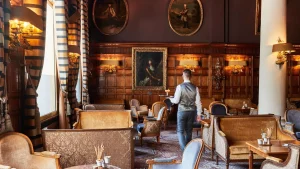
Plongé dans une ambiance du XVIIIe siècle, Le Chantecler met à l’honneur la haute gastronomie méditerranéenne contemporaine. Dans ce restaurant étoilé MICHELIN, on trouve une harmonie élégante de tradition et modernité, avec des préparations qui content un récit progressif.
Virginie Basselot, Meilleur Ouvrier de France, orchestre depuis 2018 les créations culinaires du restaurant. Sa cuisine, attentive aux saisons et profondément ancrée dans les paysages du Sud invite à un dîner dans un décor XVIIIe d’exception.
Normande d’origine, la cheffe a soigneusement tissé des liens avec les artisans et producteurs locaux. Ainsi, elle a le privilège de travailler des produits d’exception pour élaborer des recettes élégantes et modernes. La cheffe favorise également la précision du geste et la lisibilité des saveurs dans le but de tirer le meilleur des saveurs du terroir.
Sa cuisine contemporaine, mêlant créativité et innovation, ne cherche pas à déconstruire la tradition, mais aspire à la rendre plus nette aux papilles d’aujourd’hui.
À ses côtés, se trouve le chef sommelier Jean-Gabriel Siviragol qui fait voyager les convives avec des histoires de cépages et de terroirs. Le directeur de salle Julien Freulon orchestre également le service avec finesse pour sublimer l’expérience.
Au cœur de la table gastronomique du Negresco, la carte suit le rythme des saisons. Ainsi, elle évolue selon les périodes de repos biologique, les légumes de plein champ et les arrivages de la pêche niçoise. De plus, la cheffe concocte les plats en veillant à ce que les cuissons soient nettes et les jus concentrés tout en laissant émerger la saveur de chaque ingrédient.
Le repas du restaurant se savoure tel un récit progressif. Dès le premier service, un dialogue s’installe entre la texture des produits et les saisons. Viennent ensuite les plats structurés avec les sauces qui dévoilent une technicité maîtrisée. En matière de desserts, le chef pâtissier joue sur les températures et les consistances, avec des sucres maîtrisés et des finitions soignées. Telle une note musicale, l’ensemble se savoure avec un rythme calme, permettant aux gourmets de percevoir les nuances qui relient chaque création.
Le Chantecler est réputé pour son cadre au grand style français, avec ses boiseries provenant du Château de Chaintré et ses murs ornés d’œuvres historiques, dont une peinture de Louis XV et un portrait de Marie Leszczynska.
Les arts de la table contribuent également à l’expérience visuelle. Les assiettes du restaurant sont choisies pour dialoguer avec des plats précis, prolonger une ligne et souligner une couleur. À la hauteur de sa renommée, le Negresco utilise des pièces d’artisans et de maisons dont le savoir-faire accompagne les plus grandes tables françaises depuis des générations. Ses collections incluent les créations de Sylvie Lorne, d’Élisabeth Monroy et des Demoiselles d’Anjou, sans oublier les porcelaines Haviland et Bernardaud.
Hervé Frézal, Meilleur Ouvrier de France, enjolive aussi les lieux avec ses compositions florales saisonnières. Parfois, son art floral se trouve même dans les assiettes à travers des herbes aromatiques ou des fleurs comestibles.
Il ne faut pas non plus oublier la lumière, surtout le soir, lorsque l’éclat des lustres vient se refléter dans les vitres, se mêlant aux nuances nocturnes de la Méditerranée. C’est la promesse d’une lumière chaude valorisant les couleurs des plats, mais aussi les textures des sauces.
Tous ces détails créent une atmosphère sereine où l’expérience gastronomique du restaurant devient une véritable immersion dans l’art de vivre à la française.
En soirée, le pianiste Luc Escolano accompagne le dîner avec délicatesse. Ses mélodies créent une ambiance intime où la gastronomie dialogue avec l’art floral, les arts décoratifs et la musique.
Après le dîner, l’expérience se poursuit au Bar du Negresco, Le 1913 https://www.lenegresco.com/restaurants/le-1913. Les boiseries authentiques de 1913, les œuvres d’art et la lumière tamisée prolongent l’esprit du palais hôtelier. Les cocktails sont élaborés avec la même exigence que la cuisine du Chantecler et l’élégance niçoise s’exprime avec une décontraction raffinée.
La terrasse de l’été, située au plus près de la baie des Anges
En période estivale, Le Chantecler s’ouvre sur une terrasse paysagée. La lumière de la Côte d’Azur et la proximité de la mer métamorphosent la perception du lieu. À quelques pas, la célèbre Promenade des Anglais déploie ses reflets dorés au bord de l’eau. La terrasse laisse entrer la brise marine et une clarté douce qui semblent prolonger les saveurs de l’assiette. Cette atmosphère méditerranéenne harmonise méticuleusement la lumière avec le paysage et la cuisine.
Au final, le Chantecler n’est pas seulement une table étoilée MICHELIN. C’est un espace où la gastronomie dialogue avec l’histoire du lieu, avec les artisans qui l’entourent et avec une certaine idée de la création contemporaine. La cuisine de Virginie Basselot, Meilleur Ouvrier de France, respecte la mémoire des produits tout en leur offrant un regard actuel. L’expérience dépasse alors la simple dégustation, puisqu’elle se transforme en une rencontre entre sensibilité contemporaine et patrimoine.